 |
 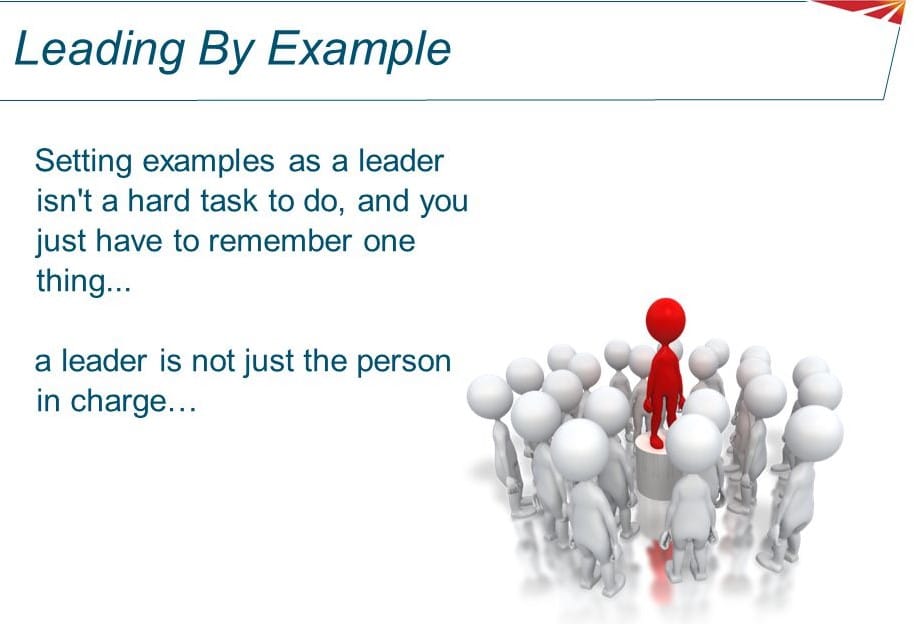 The “do as I say, not as I do” approach is not an effective method of leading, particularly when working to improve an organisation’s safety culture. In order to establish an effective safety culture, we must all lead by example. In order for an organisation to develop a strong safety culture, that culture must start from the top (senior management) and extend down to the least experienced employee. Every worker needs to understand that safety must be the first focus of their job, particularly in construction where the safety risks are much higher. The final responsibility for safety is not the responsibility of the safety officer or manager, but of each employee doing the work. Leadership Leadership is an essential part of a health and safety management system because attitudes to safety and health are determined by top management. Often, the best leadership approaches are those that affect others’ attitudes, beliefs and behaviours, without need for formal authoritative means. This is at the core of health and safety management, whereby every worker, irrespective of their role, is empowered (and possesses a duty of care), to protect their own safety, health and wellbeing, and of their work colleagues. Everyone is Responsible No one plans to have an accident. No worker leaves home in the morning thinking, “I’m going to hurt myself or somebody else today.” However, incidents do happen and there is always a reason. Workplace injuries might be attributed to complacency, job pressures (production, deadlines and long work hours), family problems, stress, lack of training or failure to recognise risk, among a host of other reasons. Sometimes the reason may be a simple lack of knowledge, or perhaps the worker did not understand instructions. In a strong safety culture, everyone feels responsible for safety and pursues it on a daily basis. In this type of environment, employees go beyond the call of duty to identify unsafe conditions and behaviours and intervene to correct them. Safety Is An Attitude! An often overlooked aspect of safety is your attitude. A negative attitude towards safety can impact job performance and increases your chance of getting injured. Maintaining a positive attitude will help reinforce the importance of safety procedures and equipment. How to Stay Positive about Safety: • Follow all safety rules at all times. The rules are there for your and your colleagues’ safety. • Take responsibility for your own safety. Report any injuries to a supervisor immediately. • Be serious about safety, do not take shortcuts! • Use all necessary PPE. • Do the best you can—not the fastest you can. Avoid completing tasks in a hurry, and put safety first. • Look out for hazards. Be aware of your surroundings and potential hazards. • Listen and learn about the safety protocols in the workplace. • Get help, if needed. Don’t try to do everything on your own, especially when having help would make the task safer. Be team oriented. Reporting of Observations / Possible Improvements We actively encourage all employees and those attending our workplaces to report any issues or make suggestions on how MJ Conroy can strive to continually improve the workplace environment for all. All workplaces have QR codes posted on posters allowing for these to be submitted. 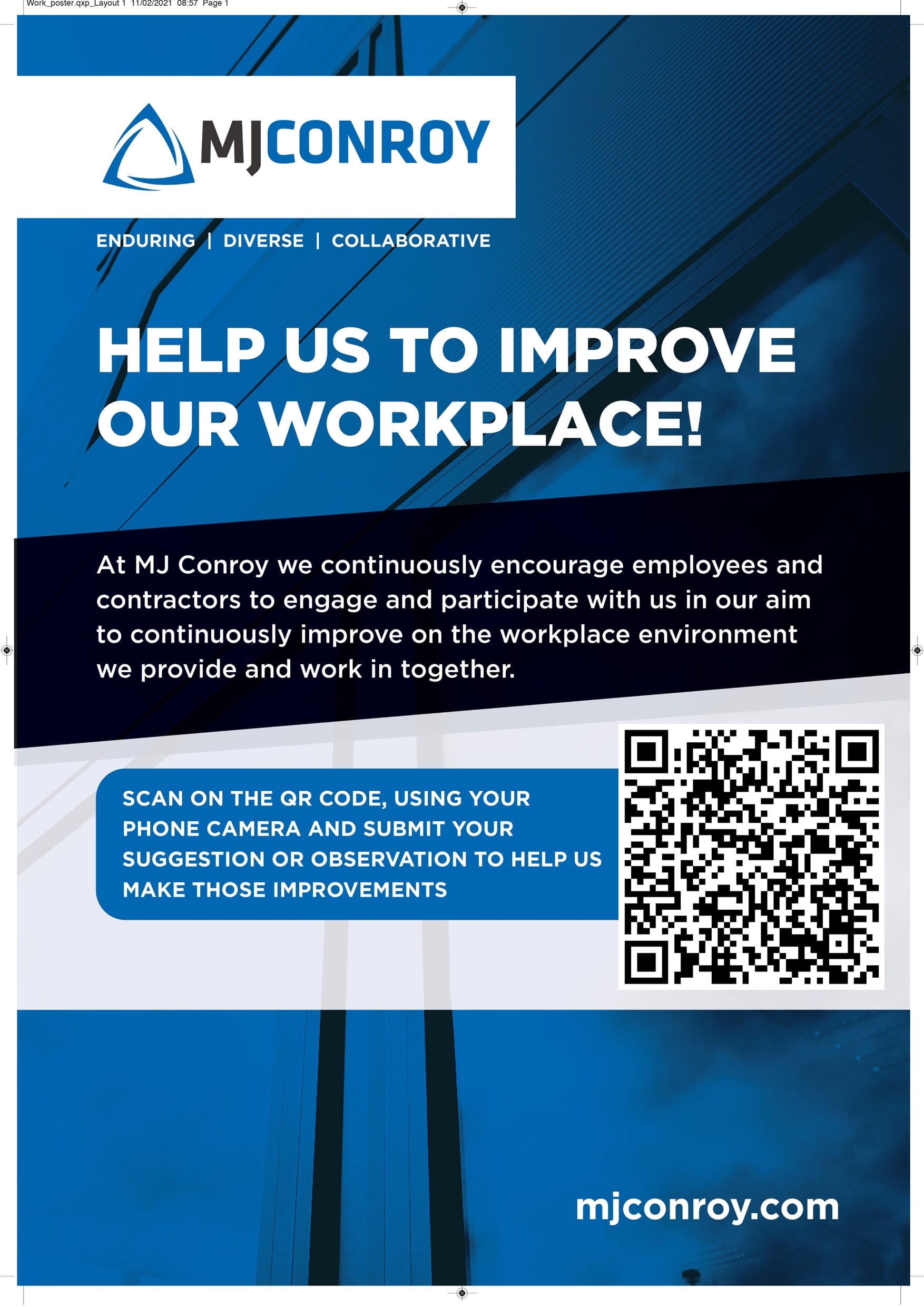 |